From a corporate risk management and governance perspective, what is the primary purpose of establishing and distributing a company-wide Code of Conduct?
Select an answer to reveal the explanation.
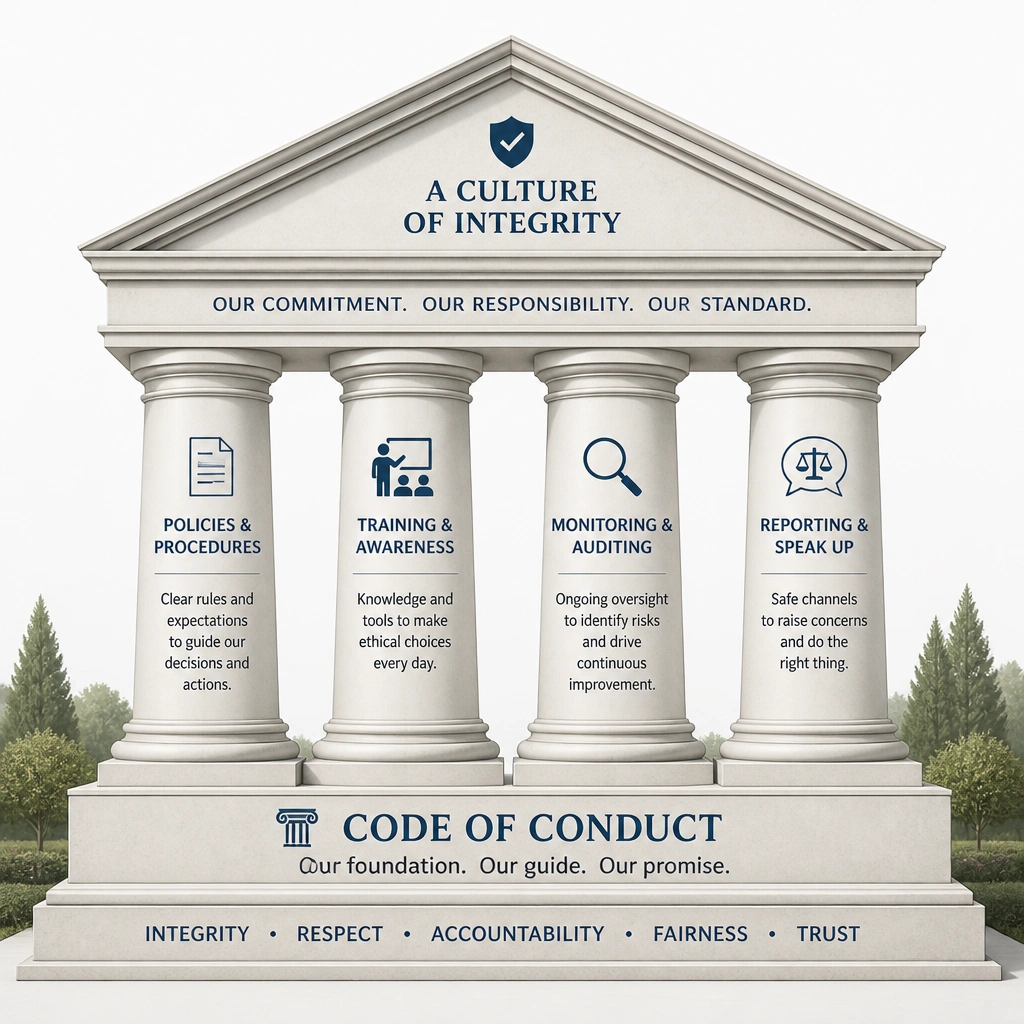
Short Explanation and Infographic
Think of a Code of Conduct as the playbook for your entire team. You can't expect your players to know the rules of the game if you don't give them the book! From a risk management view, this isn't just a document that sits on a shelf to look pretty. It's the absolute foundation of your compliance program. It defines what's acceptable, what's off-limits, and gives your team a clear path to resolve those gray-area ethical questions that show up in the real world. It's not about escaping liability or overriding local laws—it's about building a culture where everyone knows how to do the right thing. Got it? Let's keep rolling!
Full explanation below image
Full Explanation
A Code of Conduct is the cornerstone of an effective corporate compliance program. From a risk management perspective, its primary objective is to establish the organization's ethical values, define expectations for employee behavior, and provide practical guidance for navigating complex ethical and compliance issues. By clearly articulating boundaries around topics such as conflicts of interest, bribery, data protection, and workplace behavior, the Code helps mitigate the risk of legal infractions and reputational damage. Insulating the corporation from liability is unrealistic; a Code of Conduct does not grant a company immunity from liability for employee actions, especially if the code is not actively enforced. Furthermore, internal company policies cannot legally supersede or override statutory and regulatory requirements. Finally, outlining commercial and sales tactics describes an operational or business strategy document, not an ethical or compliance code. An effective Code of Conduct must be accessible, regularly updated, and integrated into employee training to serve as a living guide for organizational integrity.