An employee is presented with a business opportunity that could result in substantial personal financial gain, but it is directly tied to one of the company's major suppliers. What is the primary compliance risk in this scenario?
Select an answer to reveal the explanation.
Short Explanation and Infographic
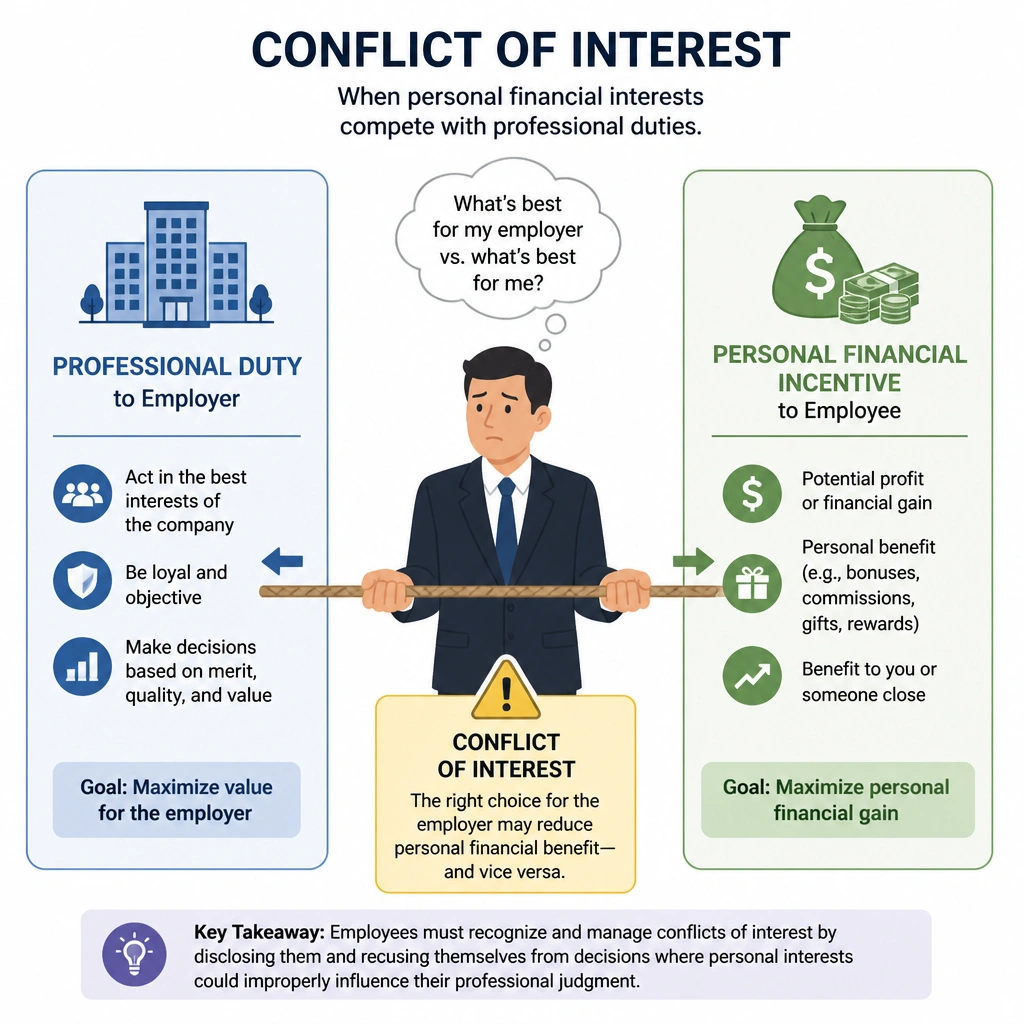
Imagine you're the referee in a playoff game, and one of the teams offers you a hot stock tip. Even if you try to be fair, everyone is going to doubt your calls. That's a classic conflict of interest! In this scenario, when an employee gets offered a private investment opportunity by a supplier, it immediately clouds their judgment. How can they make objective decisions for the company when their own bank account is on the line? They can't. This is why conflicts of interest are such a huge deal in compliance. It's not about whether the deal is profitable or if the employee has the cash—it's about protecting professional judgment and keeping everything above board. Got it? Sweet.
Full explanation below image
Full Explanation
Conflicts of interest occur when an individual's private interests—financial, personal, or professional—interfere, or appear to interfere, with their ability to make objective decisions on behalf of their employer. In the corporate environment, employees owe a duty of loyalty to their organization. When presented with a business opportunity that yields personal financial gain from a party doing business with the company, the employee's professional judgment is compromised. The primary risk is that the employee will make decisions that favor their personal financial interests rather than the best interests of the company. Personal financial hurdles are individual concerns, not corporate compliance risks. Similarly, vendor performance issues or the vendor's profitability are operational risks; they do not represent the core compliance threat of compromised objectivity and ethical breaches caused by a conflict of interest. Organizations must manage these situations through strict disclosure policies, codes of conduct, and recusal processes to ensure that all business decisions are made objectively and transparently.