A company's risk assessment identifies a high risk of bribery and corruption within a specific international business unit. Which of the following is the most appropriate compliance response?
Select an answer to reveal the explanation.
Short Explanation and Infographic
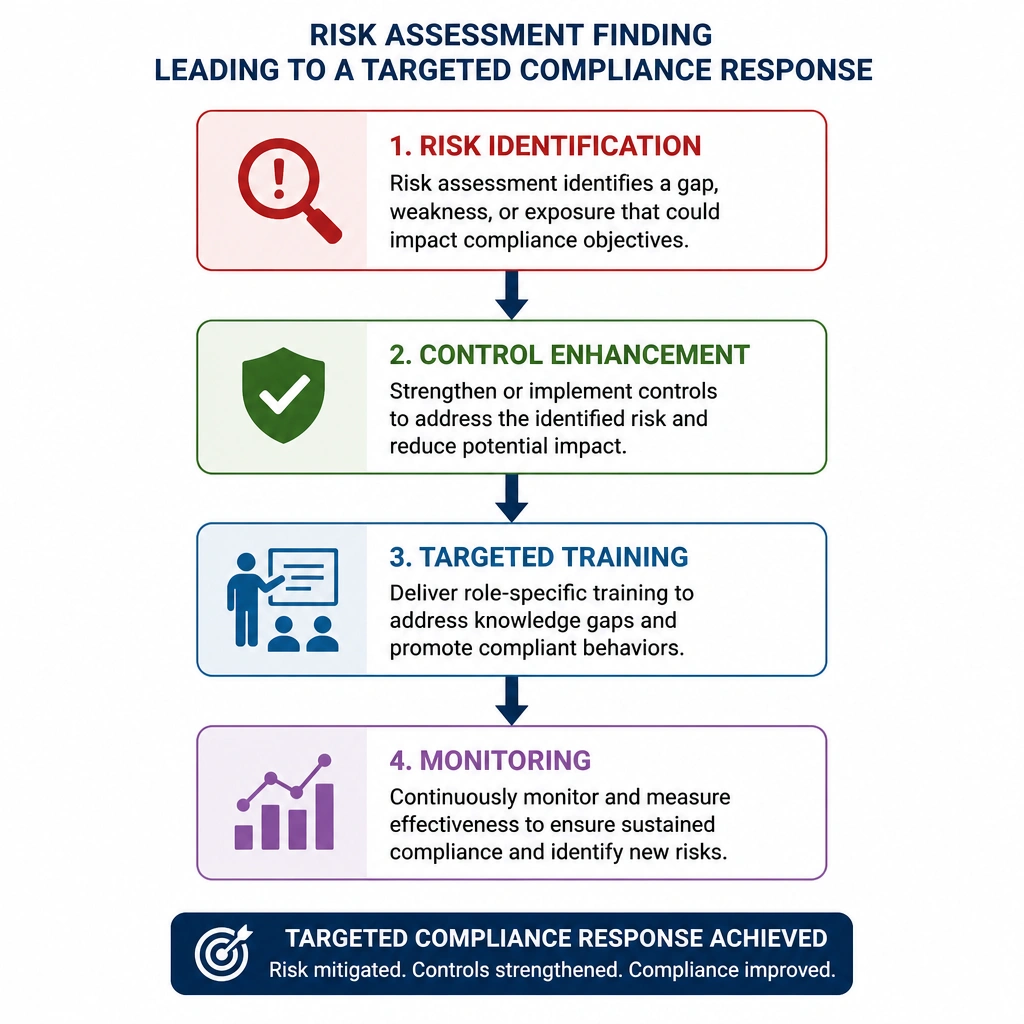
Imagine your network monitoring tool alerts you that a specific router is dropping packets and is highly vulnerable to a security breach. Do you ignore it? No way! Do you throw the router in the trash immediately? Definitely not. You patch it, configure stronger security access lists, and monitor it closely. It's the same thing here! When a risk assessment flags a business unit for high corruption risk, you don't ignore it or start firing people blindly. You step up your game by putting stronger internal controls in place, training the staff on compliance, and keeping a close eye on their transactions. That's how you manage risk like a pro!
Full explanation below image
Full Explanation
When a risk assessment identifies an area of elevated risk, a compliance program must respond dynamically. Under guidelines from regulatory bodies like the Department of Justice (DOJ), a compliance program should be risk-based, meaning resources and controls should be disproportionately allocated to the areas of highest risk. Taking no action violates the fundamental purpose of risk management and exposes the company to severe regulatory enforcement when a violation occurs. Selling or dissolving the unit is an extreme measure that is generally commercially unfeasible and does not address the underlying operational risks of the business. Terminating the management team immediately without an investigation is premature; a high-risk rating indicates a vulnerability in the control environment, not necessarily active misconduct by specific managers. Remediation must focus on strengthening preventative and detective controls, educating employees through targeted training, and establishing ongoing monitoring to ensure transactions are transparent and compliant.