When establishing a third-party risk management program, which of the following represents a significant pitfall that can compromise the due diligence process?
Select an answer to reveal the explanation.
Short Explanation and Infographic
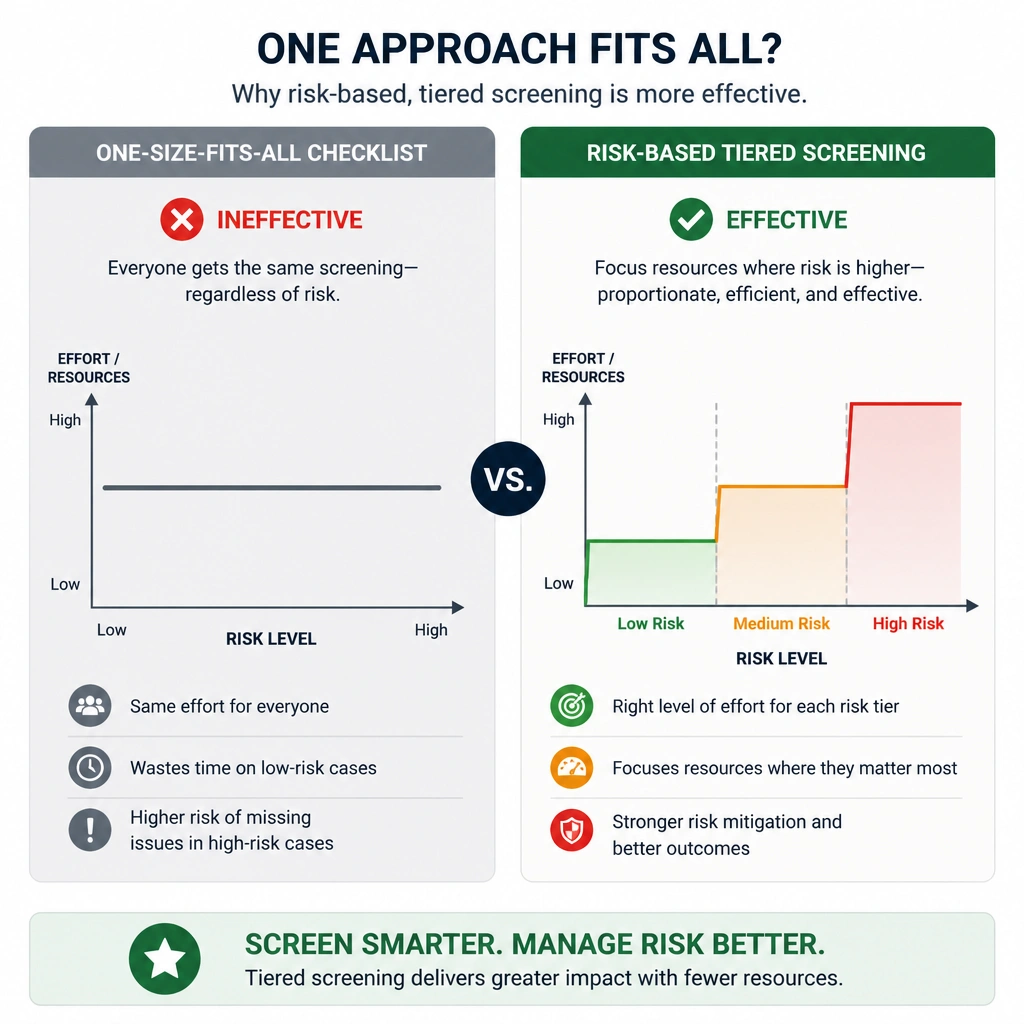
Here's the deal: if you try to use the exact same security settings for a public guest Wi-Fi and your core database servers, you're going to have a bad time. You've got to match the security to the risk! It's the exact same story with due diligence. A huge trap people fall into is using a "one-size-fits-all" checklist for every single vendor. Checking a local office supply store shouldn't require the same level of scrutiny as onboarding a foreign customs agent. If you treat them all the same, you waste resources on low-risk partners and miss critical red flags on high-risk ones. Keep your due diligence risk-based, and you'll save yourself a lot of headaches!
Full explanation below image
Full Explanation
A critical failure in third-party risk management is the implementation of a uniform, non-risk-based due diligence process. A "one-size-fits-all" approach treats all vendors, agents, and partners identically, regardless of their location, industry, or the services they perform. This approach is highly inefficient and ineffective. It dilutes compliance resources by over-auditing low-risk vendors while failing to conduct the deep, investigative due diligence required for high-risk third parties (such as those operating in countries with high corruption indexes or those interacting directly with foreign government officials). Performing due diligence at the beginning of the relationship is a best practice, not a pitfall, as it prevents engaging with corrupt partners. Using expert teams enhances the quality and accuracy of assessments and is a recommended practice. Risk-adapted due diligence is the correct, risk-based methodology because it ensures that scrutiny and monitoring are proportional to the risk that the third party presents. Therefore, due diligence must be tailored to the specific risk indicators of each engagement to be legally defensible and operationally sound.