A multinational corporation structures its sales commission plan to reward representatives purely based on the gross contract value of signed deals, with no compliance-based metrics or clawback provisions in place. What is the most critical compliance risk associated with this compensation structure?
Select an answer to reveal the explanation.
Short Explanation and Infographic
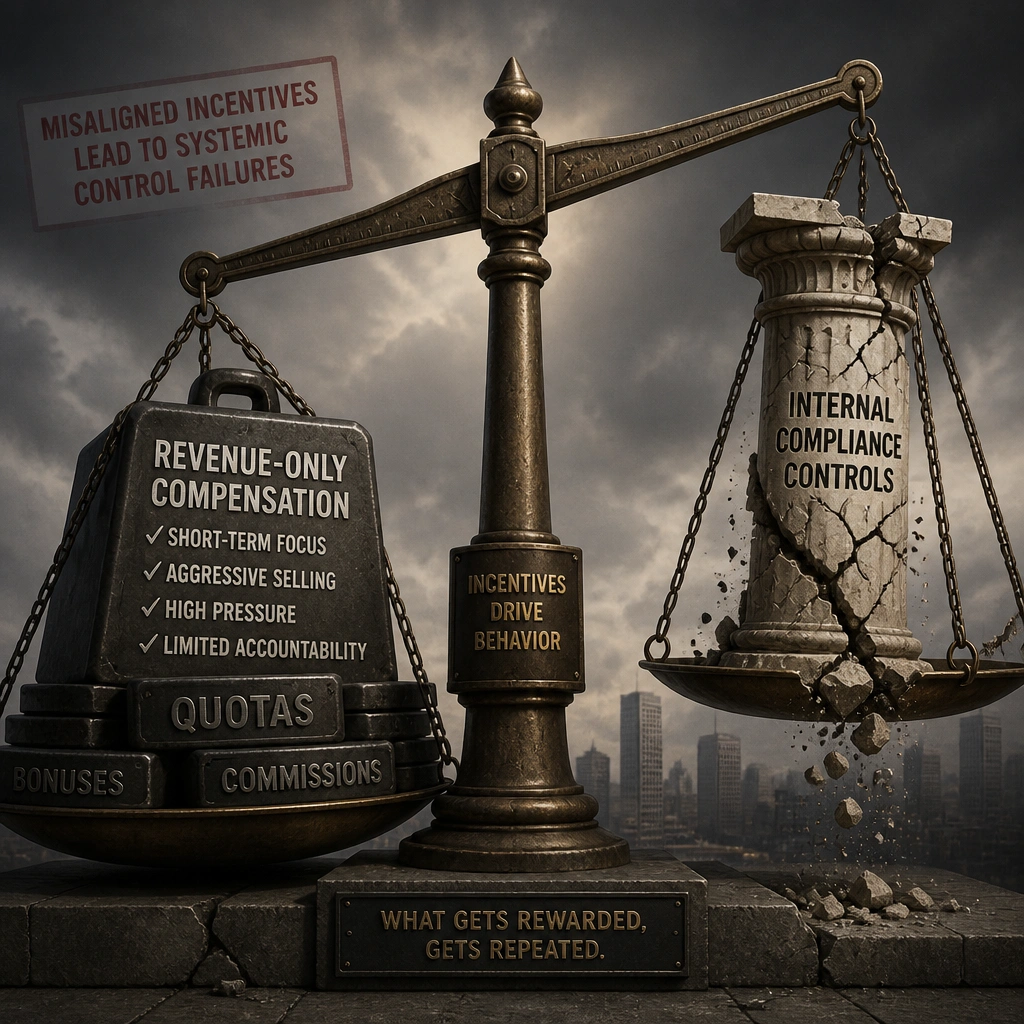
Here's the deal: if you feed a beast only red meat, don't be surprised when it starts hunting the neighbors' pets! When you structure compensation purely around revenue, you're telling your sales reps that the rules don't matter as long as they bring home the cash. Trust me on this, this setup is a ticking time bomb. In the real world, if you tell a rep 'make the number or you're fired' and don't check how they make that number, they will eventually cut corners. They might bypass internal approvals, promise features your product doesn't have, or even pay bribes to seal the deal. It's not because they're bad people; it's because the system's incentives are completely broken. You have to align compensation with your compliance values, or you're basically paying your team to destroy the company's reputation. Got it? Sweet.
Full explanation below image
Full Explanation
In compliance program design, incentives and disciplinary measures must be balanced to promote an ethical culture. The Federal Sentencing Guidelines for Organizations (FSGO) and the Department of Justice (DOJ) evaluation of corporate compliance programs explicitly emphasize that compensation structures should encourage compliant behavior and deter misconduct.
Option B is correct because compensation plans that focus exclusively on revenue targets without factoring in compliance create a severe misalignment of incentives. When employees are compensated solely on financial metrics, they are highly incentivized to bypass internal controls, misrepresent products, or engage in bribery (violating laws like the FCPA) to hit targets. This systemic pressure frequently leads to catastrophic legal, regulatory, and reputational damage.
Option A is incorrect because a revenue-only compensation structure does not typically reduce motivation; rather, it supercharges motivation in a dangerous, compliance-blind direction.
Option C is incorrect because while administrative overhead may occur in any complex business, it is a secondary operational concern compared to the existential legal risks of widespread employee misconduct.
Option D is incorrect because sales departments in revenue-focused environments often grow rapidly in the short term due to high payouts, though they suffer long-term instability and high turnover when compliance failures inevitably lead to investigations and terminations.
Best practices dictate that compliance objectives should be integrated directly into performance evaluations. Organizations should implement compliance-based metrics, such as evaluating whether employees complete training on time, adhere to expense policies, and show commitment to the code of conduct. Furthermore, clawback policies should be instituted to retrieve bonuses in the event of compliance violations.