An organization is designing a confidential reporting system to encourage employees to report potential compliance violations. Which combination of features is most critical to establishing employee confidence and driving active utilization of the system?
Select an answer to reveal the explanation.
Short Explanation and Infographic
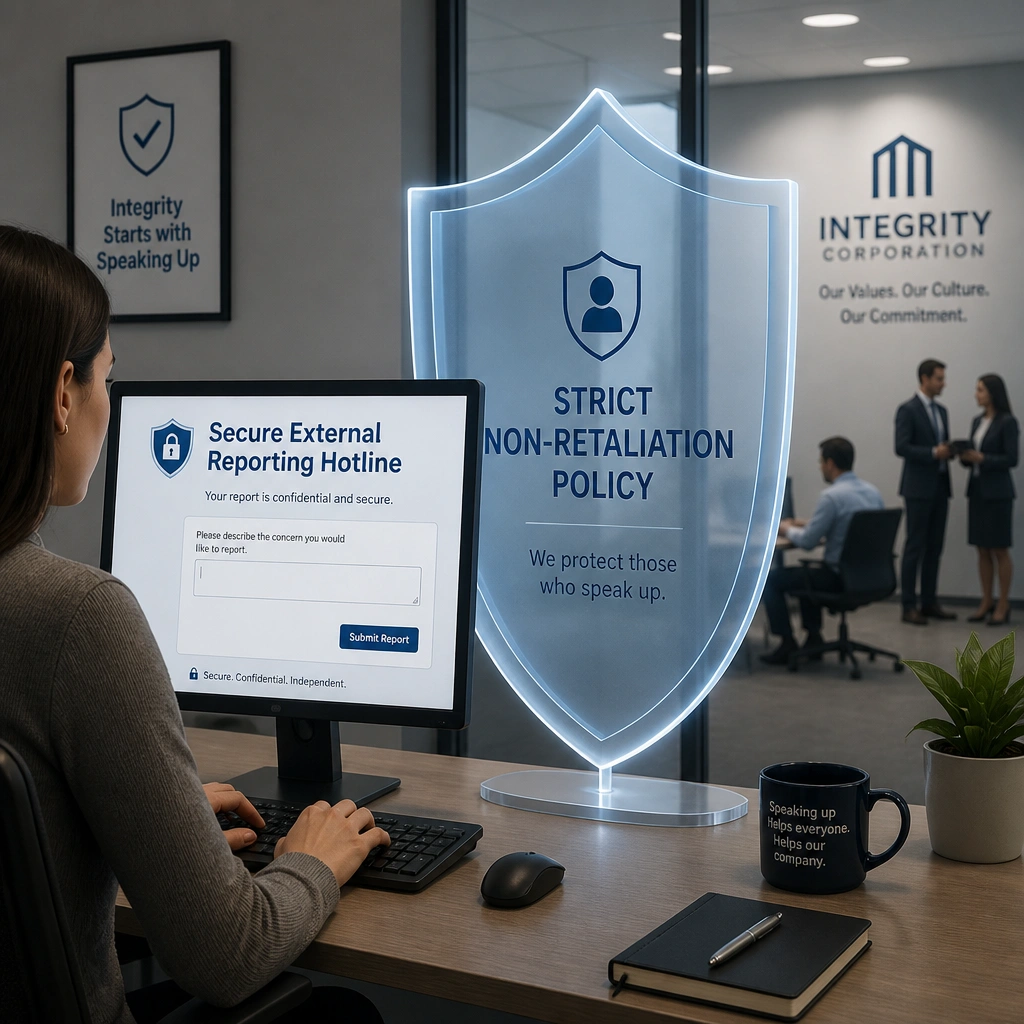
Think of it like this: if you suspect something shady is going on in your department, but you know that reporting it might get you fired or blacklisted by your boss, are you going to speak up? No way! Trust is the lifeblood of any whistleblower system. If employees think the hotline is run by the boss's best friend or that HR will leak their name, they'll keep their mouths shut. In the real world, to get people to use a hotline, you have to do two things. First, host it through an independent third-party company so the IP addresses and phone numbers aren't logged by internal IT. Second, and most importantly, you need a rock-solid, zero-tolerance policy against retaliation. If employees see that reporters are protected and respected, they'll trust the system. If they don't, that hotline will sit silent while issues fester in the dark.
Full explanation below image
Full Explanation
A central pillar of an effective compliance program is an open reporting channel where employees can report misconduct without fear of retaliation. Both the Sarbanes-Oxley Act (SOX) and the DOJ's compliance program guidelines place heavy emphasis on the availability of confidential reporting mechanisms and the protection of whistleblowers.
Option C is correct because utilizing an independent third-party vendor and enforcing a strict non-retaliation policy directly address the two primary barriers to reporting: fear of exposure and fear of reprisal. Third-party management provides technical anonymity (e.g., stripping metadata, IP addresses, and caller ID), which reassures employees that their identity is secure. A robust non-retaliation policy, backed by clear disciplinary actions for anyone who attempts to retaliate, builds the organizational trust necessary for employees to voice concerns.
Option A is incorrect because restricting access to business hours reduces availability and convenience, making it harder for employees to report comfortably outside of work environments.
Option B is incorrect because mandatory identity verification destroys the promise of anonymity, which severely discourages whistleblowers from coming forward.
Option D is incorrect because requiring supervisor pre-screening is a conflict of interest, as supervisors themselves are sometimes the subjects of compliance reports. This approach would completely eliminate employee trust.
Best practices for managing hotlines include offering multiple reporting intake channels (web, phone, email), publicizing the hotline regularly through posters and training, and providing the board of directors with periodic, aggregated summaries of hotline activity and investigation outcomes.