An employee drops an anonymous tip into the compliance suggestion box stating, "Someone in accounting is doing something fishy with vendor invoices." The note doesn't specify who, which vendor, or what the actual activity is. What is the most appropriate first step for the compliance manager?
Select an answer to reveal the explanation.
Short Explanation and Infographic
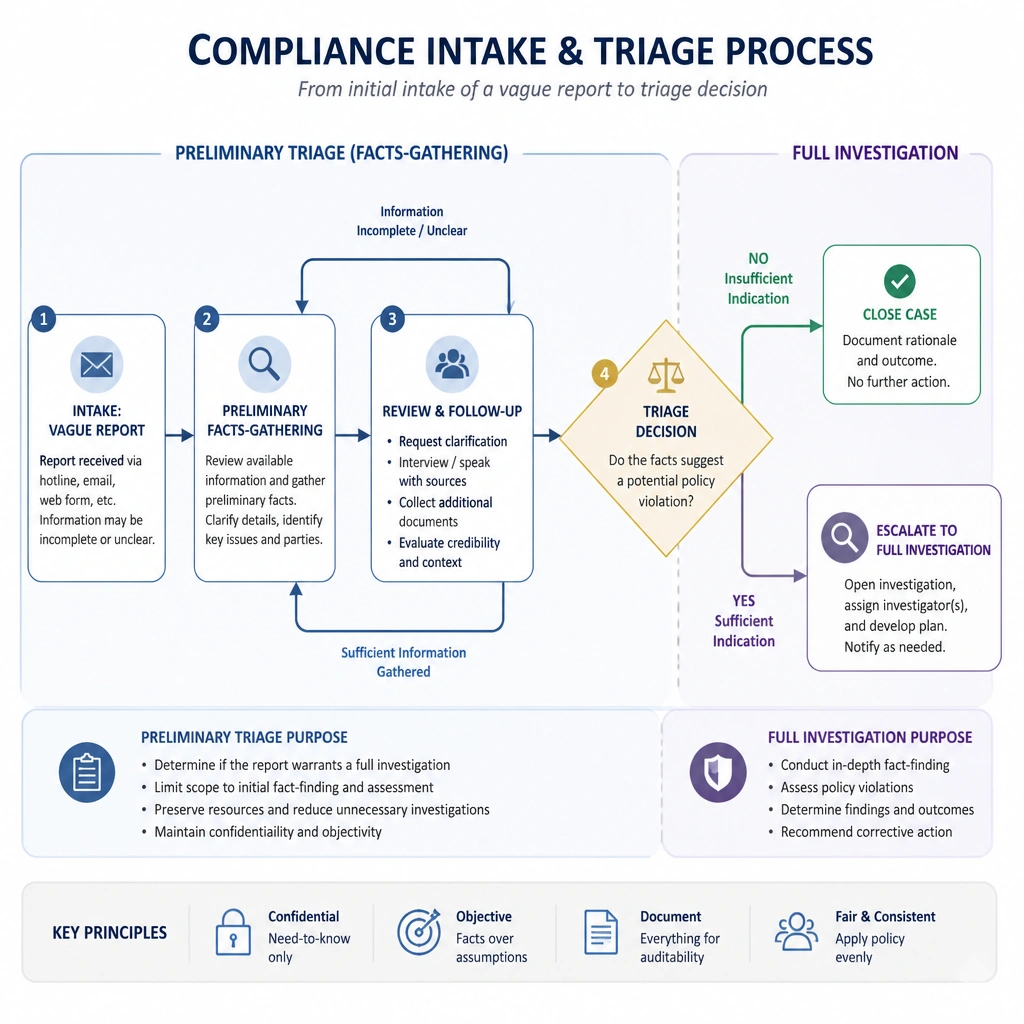
Check this out—when a vague tip lands on your desk, your first instinct might be to either panic and launch a full-blown investigation or just throw it in the trash. Trust me, neither is the right move! If you launch a full investigation right away, you're burning valuable resources and potentially causing office panic for no reason. But you also can't just ignore it. The smart play is to do a quick, quiet preliminary review. Check a few files, see if anything looks off, and get your facts straight. If that sniff test turns up something fishy, then you go all-in with a formal investigation. Simple, clean, and protects the organization.
Full explanation below image
Full Explanation
In compliance program administration, intake channels such as hotlines, web portals, or physical dropboxes often receive vague, anonymous, or incomplete reports. The immediate challenge for a compliance officer is to balance the obligation to address potential misconduct with the responsible utilization of corporate resources. The correct response in this scenario is to conduct a preliminary review (or triage). This initial phase involves gathering high-level facts, reviewing available documents, or searching public records to determine whether the allegation has any substance. It prevents the organization from prematurely launching a disruptive, expensive, and potentially reputation-damaging full-scale investigation based on groundless tips. Conversely, dismissing the tip outright exposes the company to severe legal and regulatory risk if a violation is indeed occurring and goes unaddressed. Option A is incorrect because notifying department heads or external vendors prematurely could alert wrongdoers, leading to the destruction of evidence or collusion. Option B is incorrect because compliance professionals must document and evaluate every report; summarily dismissing vague tips violates the core principles of an effective compliance program under federal guidelines (such as the US Sentencing Guidelines). Option D is incorrect because a full investigation requires significant resources, formal planning, and often legal counsel involvement, which is not justified until preliminary findings indicate a credible threat or systemic issue. Triage is the industry standard for managing compliance reporting flow efficiently.