From a risk management and mitigation standpoint, what is the primary role of a corporate code of conduct?
Select an answer to reveal the explanation.
Short Explanation and Infographic
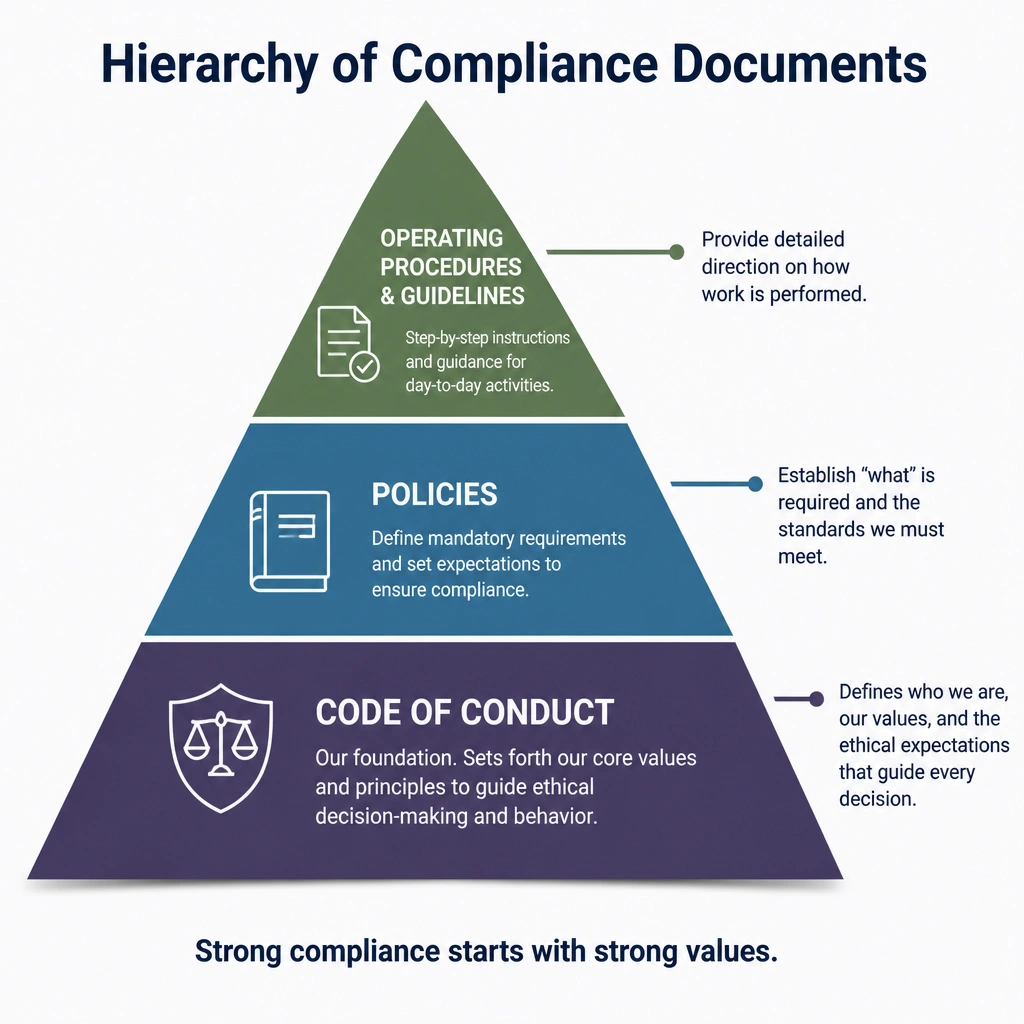
Here's the deal: a code of conduct isn't some magic shield that lets a company dodge all liability if an employee goes rogue, and it definitely doesn't override the law. Think of it as the playbook for the entire company. It lays out the ground rules—what's okay, what's not, and how we handle those grey areas when they pop up. From a risk perspective, this is your baseline. If your team doesn't know what's expected of them, how can you expect them to make the right call under pressure? It's all about proactive risk mitigation.
Full explanation below image
Full Explanation
From a risk management perspective, the Code of Conduct is the cornerstone of an organization's compliance program. It establishes the organizational culture, values, and boundary lines for acceptable behavior. While some organizations mistakenly treat the code as a legal disclaimer to shield the company from liability, regulators (like the Department of Justice) view the code as a living document that must guide day-to-day behavior and assist employees in navigating complex ethical dilemmas. When employees face gray areas—such as conflicts of interest, dealing with foreign officials, or handling proprietary data—the Code of Conduct provides a clear decision-making framework, thereby mitigating risk at the source. Option A is incorrect because a code of conduct cannot entirely eliminate or limit corporate liability, especially if the company has a systemic culture of non-compliance or failed oversight. Option B is incorrect because corporate policies can never supersede or override local, state, or federal laws; policies must align with and often exceed legal minimums. Option D is incorrect because while a code of conduct may reference financial integrity, specific accounting processes are detailed in internal financial controls and standard operating procedures, not in the general code of conduct. Ultimately, the primary value of the code is preventive: setting clear, ethical expectations across the enterprise.