An organization receives a verified report of a major regulatory non-compliance incident that could impact customer data privacy. Which of the following is the most critical element of the organization's immediate response?
Select an answer to reveal the explanation.
Short Explanation and Infographic
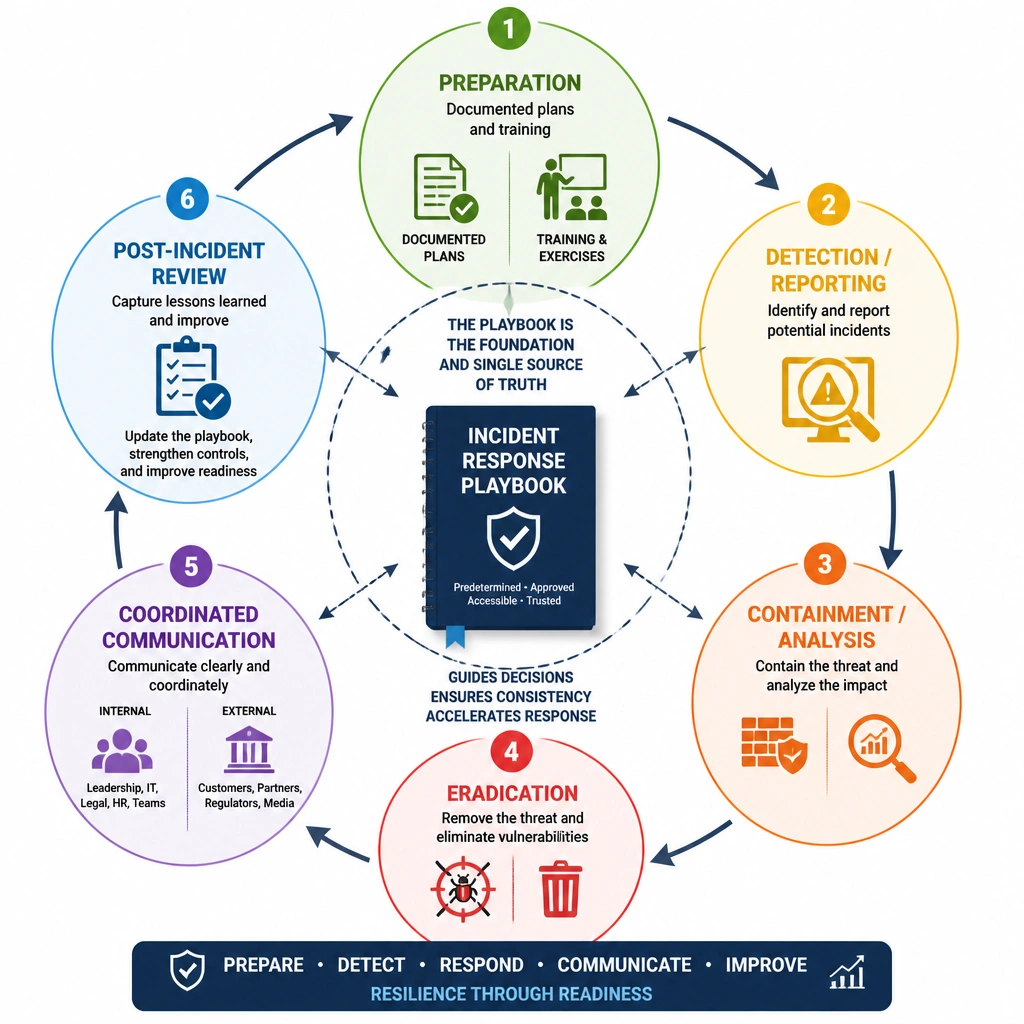
Imagine your boss walks in on a Monday morning and says, 'Our database was breached and customer records are leaking online.' If you're running around like a headless chicken trying to figure out who to call, you've already lost. The absolute key to surviving a major incident is having a game plan ready before the fire starts. I'm talking about a solid, well-documented incident response plan that lays out exactly who does what, how to contain the damage, and how to communicate—both internally and to the public. If you try to wing it or, even worse, try to sweep it under the rug, the regulators and the media will chew you alive. Get your plan in writing, test it, and stick to it when the alarms go off. Got it? Sweet.
Full explanation below image
Full Explanation
When a significant compliance breach or regulatory incident occurs, the quality of the immediate response determines the severity of the long-term impact on the organization. A chaotic, ad-hoc response often exacerbates the damage, leads to inconsistent messaging, and can result in severe legal and regulatory penalties. Option B is correct because having a predetermined, structured, and well-documented response plan is vital for effective incident management. This plan (often called an Incident Response Plan or Crisis Management Plan) outlines specific roles and responsibilities, containment procedures, escalation paths, and a comprehensive communication strategy. A coordinated communications strategy ensures that information released to regulators, the public, and employees is accurate, timely, and compliant with disclosure laws, thereby minimizing reputational harm and legal liability. Option A is incorrect because public denial without an investigation is highly risky and unethical. If the breach is later confirmed, the organization's credibility is destroyed, and regulators may view the denial as an attempt to cover up misconduct, leading to harsher penalties. Option C is incorrect because firing employees immediately, before conducting a proper investigation to establish facts and determine individual culpability, is premature. It violates basic tenets of due process and can lead to wrongful termination lawsuits, while failing to address the root cause of the breach. Option D is incorrect because focusing resources on identifying or retaliating against a whistleblower is illegal in many jurisdictions and violates the core principles of a healthy compliance program, which must protect whistleblowers to encourage internal reporting.