A multinational organization uncovers a significant policy violation regarding expense reimbursement fraud committed by a senior sales manager. As the compliance officer reviews the case, what is the primary objective of enforcing disciplinary measures against this employee?
Select an answer to reveal the explanation.
Short Explanation and Infographic
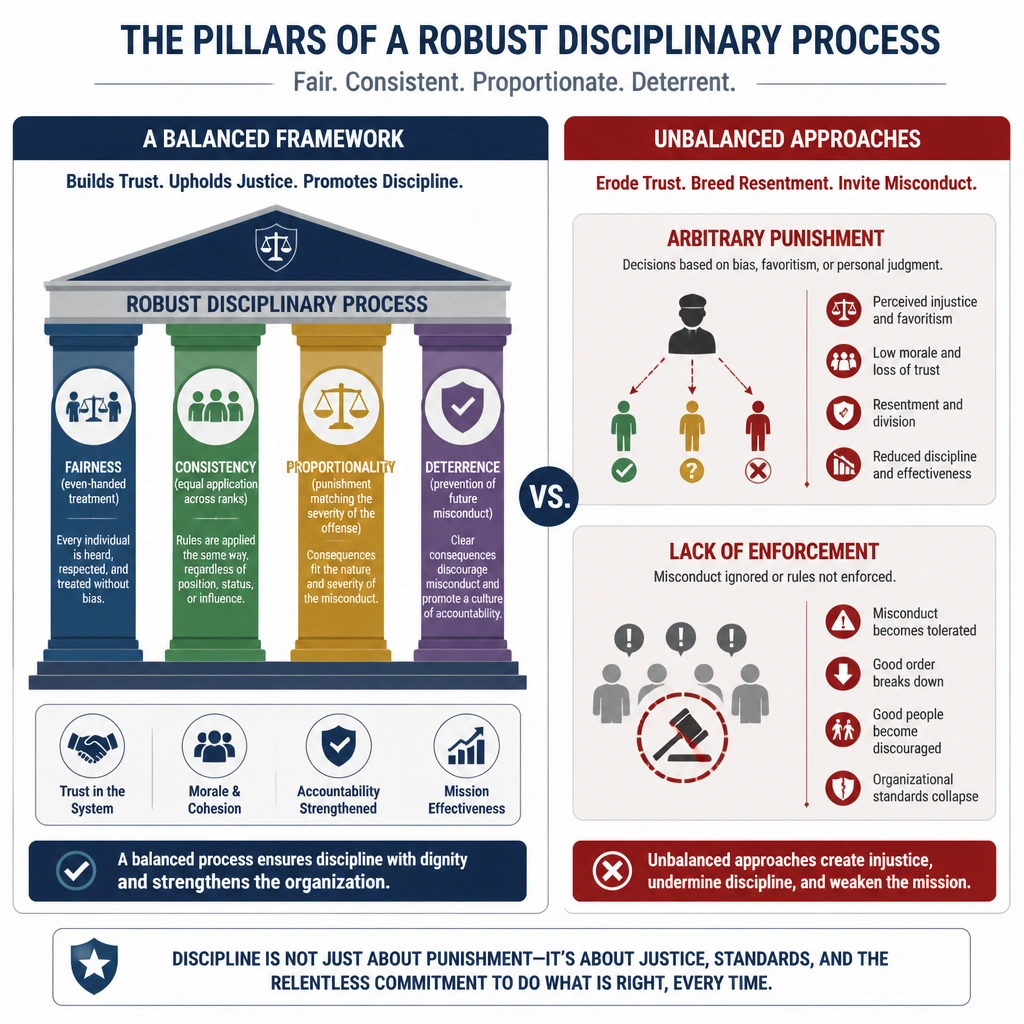
Here's the deal: when someone breaks the rules, your immediate reaction might be to throw the book at them just to prove a point. But trust me on this, that approach backfires in the real world. Disciplinary action isn't about public shaming or just checking a box for the regulators. It's about credibility and trust. If your team sees that consequences are handed out fairly, consistently, and in proportion to the actual goof-up, they'll respect the process. It sends a clear message: 'We play by the rules, and there are real, fair consequences if you don't.' That's how you deter future misconduct and build a healthy culture. Think of it like a referee in a game—you want consistent calls, not arbitrary penalties!
Full explanation below image
Full Explanation
Enforcing disciplinary measures within a compliance program serves a dual purpose: upholding organizational integrity and deterring future misconduct. For a compliance program to be considered effective by regulatory bodies (such as the U.S. Department of Justice), disciplinary standards must be applied consistently and fairly across all levels of the organization, regardless of an employee's rank or performance. Option B is correct because the ultimate goal of disciplinary action is corrective and preventive. It seeks to remediate the behavior, reinforce the organization's commitment to its code of conduct, and deter other employees from committing similar violations. Proportionality is critical; the punishment must fit the severity of the violation to maintain employee trust and organizational credibility. Option A is incorrect because a rigid 'zero-tolerance' policy that demands immediate termination for every single infraction, regardless of mitigating factors, lacks proportionality. It can discourage employees from reporting violations due to fear of overly harsh consequences for their colleagues. Option C is incorrect because public shaming or exposing employee misconduct to external parties violates privacy standards, damages employee morale, and exposes the organization to defamation or wrongful termination lawsuits. Disciplinary actions should be handled confidentially and professionally. Option D is incorrect because disciplinary action is not a substitute for a root cause analysis. In fact, an investigation and subsequent discipline should trigger a root cause analysis to identify underlying systemic control failures or training gaps that allowed the violation to happen in the first place.