A multinational firm receives a whistleblower tip about potential kickbacks in its European purchasing department. The compliance officer decides to run a forensic data analysis on purchasing databases. What is the primary role of this analysis?
Select an answer to reveal the explanation.
Short Explanation and Infographic
Check this out: when you're looking for a needle in a digital haystack, you don't just guess or start firing people. You use forensic data analysis. Think of it like a network traffic sniffer, but for financial records and transactions. It helps you scan mountains of data to spot weird anomalies—like a purchase order approved on a Sunday at 2 AM or invoices that are just under the approval limit. It's all about finding patterns of bad behavior so you can focus your investigation where it actually matters. Trust me, trying to do this manually in a big company will drive you crazy! Got it? Sweet. Let's keep rolling.
Full explanation below image
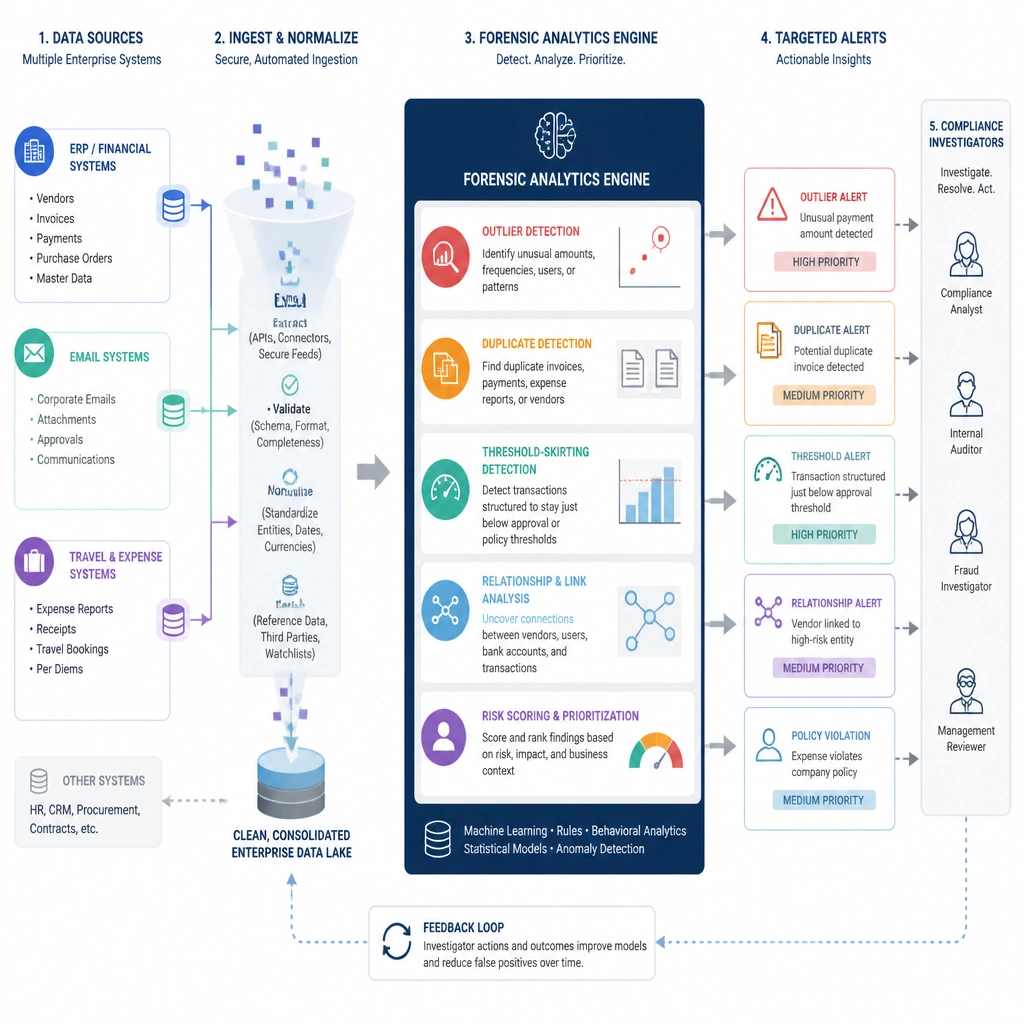
Full Explanation
In a compliance investigation, forensic data analysis serves as a powerful diagnostic tool that allows investigators to evaluate large, complex datasets to detect anomalies, patterns, and trends that point to potential misconduct. Unlike traditional auditing, which often relies on sampling a small subset of transactions, forensic data analysis can ingest and analyze 100% of a dataset. This comprehensive approach is critical for detecting subtle or systemic fraud, bribery, and corruption schemes, such as structured transactions designed to evade internal approval thresholds (e.g., multiple invoices split just under $5,000 to avoid a manager's sign-off). Option B is correct because the principal function of forensic data analysis is to scan these large datasets to isolate outliers, high-risk transactions, and unusual patterns (such as duplicate payments, off-hours activity, or round-dollar invoices) that warrant deeper investigation. Option A is incorrect because compliance investigations must prioritize thoroughness, objectivity, and due process. Immediately seeking to blame and terminate the first person linked to a transaction without a complete investigation violates basic investigation principles and can lead to wrongful termination lawsuits or missing the true masterminds behind a scheme. Option C is incorrect because the primary objective of forensic analysis during an internal investigation is fact-finding and truth-seeking, not creating a public relations shield or assuming exculpatory findings before the data is analyzed. Option D is incorrect because sales generation and marketing leads are entirely outside the scope of compliance investigations and forensic audit functions. Mixing compliance investigation tools with commercial sales prospecting represents a fundamental misunderstanding of compliance's independent role.