A compliance audit at a pharmaceutical company reveals that sales reps in the Asia-Pacific region have been providing excessive entertainment to healthcare professionals, violating local anti-bribery laws. The board demands a formal remediation plan. Which action is a critical component of this plan?
Select an answer to reveal the explanation.
Short Explanation and Infographic
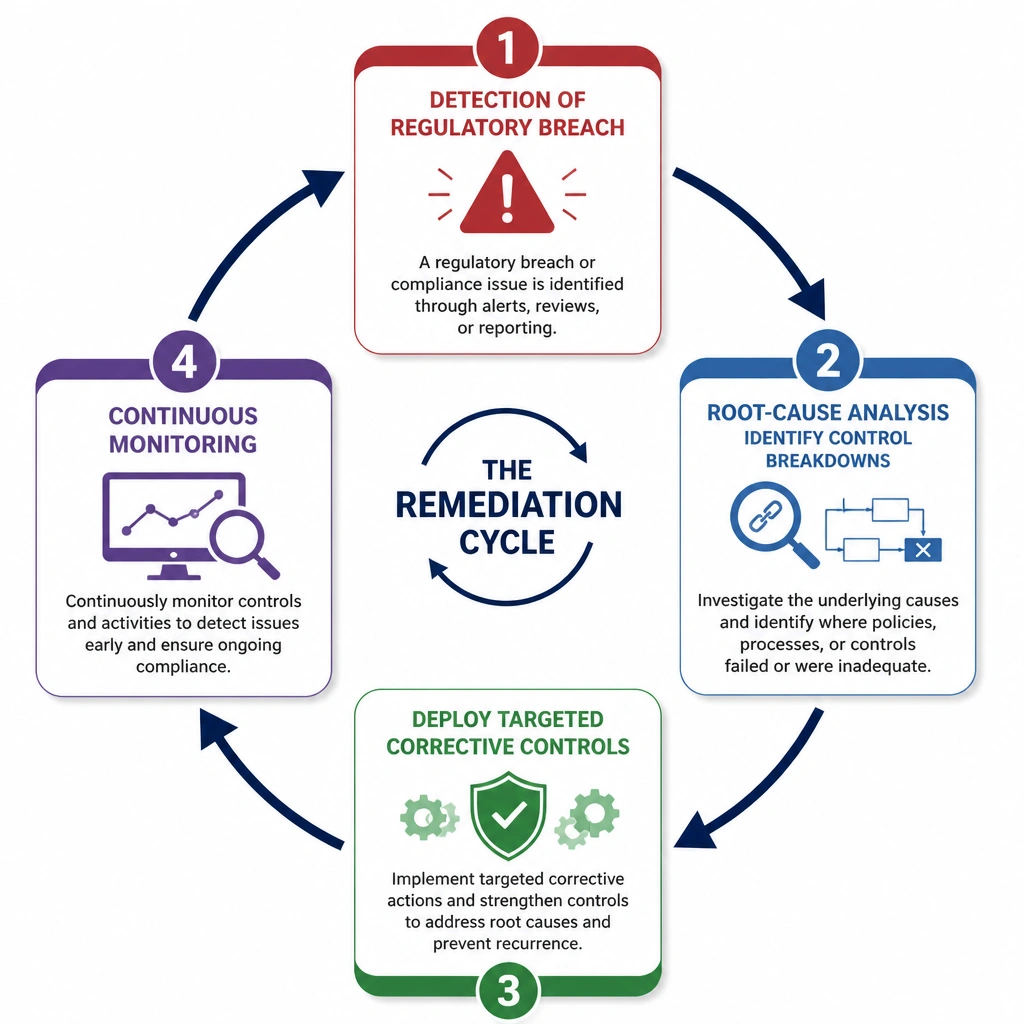
Here's the deal: when a major compliance breach happens, you can't just slap a band-aid on it or burn the house down by stopping all business. You have to figure out why the wheels fell off in the first place. Think of it like a network loop that crashes your switches. You don't just reboot and hope for the best; you find the misconfigured port and fix it. In compliance, that means identifying the control weakness—like a lack of manager sign-off on expenses—and fixing that specific gap. That's how you prevent the next crash. Got it? Sweet. Let's keep rolling.
Full explanation below image
Full Explanation
A formal remediation plan is a structured, corrective process implemented after a compliance failure to address the root causes of the violation and prevent recurrence. According to international compliance standards, such as the U.S. Department of Justice (DOJ) guidelines on the Evaluation of Corporate Compliance Programs and the OECD Good Practice Guidance, effective remediation requires a deep root-cause analysis rather than superficial fixes or extreme, disruptive actions. Option C is correct because the foundation of any defensible remediation plan is identifying the specific control weaknesses, policies, or systemic issues that allowed the violation to occur and implementing precise, corrective actions to strengthen those controls. This demonstrates to regulators that the company takes the issue seriously and is actively improving its compliance posture. Option A is incorrect because halting all business operations is commercially ruinous and disproportionate. Remediation must be structured to mitigate risks while allowing the business to operate under enhanced oversight or temporary controls. Option B is incorrect because public announcements without a remediation plan or root-cause analysis do nothing to fix the underlying issues and can damage the company’s reputation and credibility with regulators. Option D is incorrect because a zero-tolerance, immediate termination policy for minor deviations without due process creates a culture of fear, drives issues underground, and fails to address the systemic control failures that are typically at the heart of major violations.