In a mature compliance program, which of the following best defines the primary oversight responsibility of the Board of Directors?
Select an answer to reveal the explanation.
Short Explanation and Infographic
Now if you look at the corporate ladder, the Board of Directors is sitting at the very top. But that doesn't mean they're in the trenches writing policies or answering the compliance hotline. That's the Chief Compliance Officer's job. The Board's role is all about high-level oversight. They need to make sure the compliance program actually has teeth. Is it funded properly? Does it have enough staff? Does it address the real risks the company faces? Think of the Board as the ship's lookouts and steering committee, making sure the captain has the budget and tools to keep the ship from hitting an iceberg. If they just ignore the program, they're not doing their job!
Full explanation below image
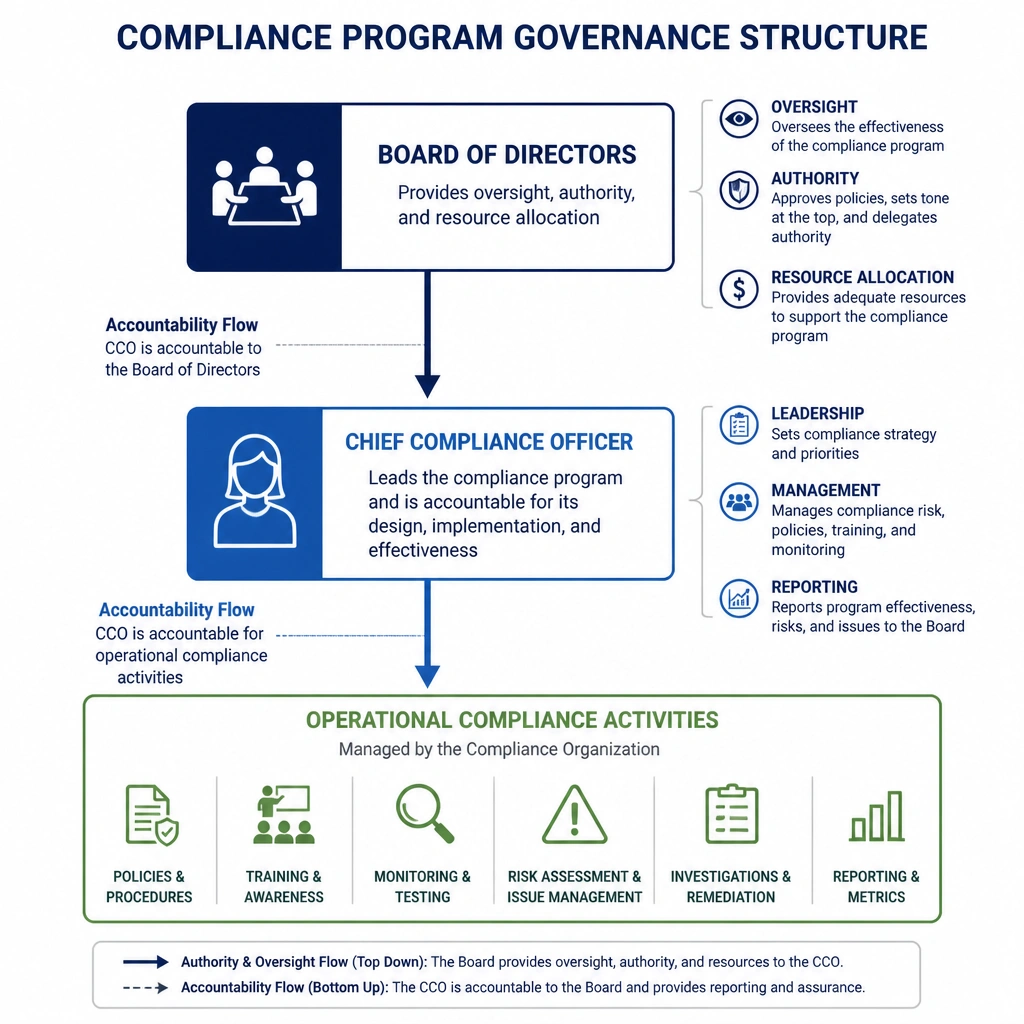
Full Explanation
The Board of Directors holds ultimate fiduciary responsibility and oversight authority for the organization's compliance and ethics program. According to standard compliance frameworks, such as the U.S. Federal Sentencing Guidelines for Organizations (FSGO) and the Department of Justice (DOJ) guidance on the Evaluation of Corporate Compliance Programs, the Board must be knowledgeable about the content and operation of the program and exercise reasonable oversight. This involves ensuring the program is adequately resourced (with budget, staffing, and technology), possesses sufficient authority and independence, and is tailored to mitigate the specific risks identified in the organization's risk profile. The Board does not engage in day-to-day management but holds management accountable for implementation. Option A is incorrect because day-to-day operations and administrative tasks are the responsibility of the compliance officer and staff, not the Board. Option B is incorrect because internal investigations are conducted by the compliance department, internal audit, or external counsel, not the Board. Option C is the correct answer because it accurately describes the Board's high-level oversight and resource allocation duties. Option D is incorrect because disciplinary actions are managed by Human Resources and corporate management, rather than the Board of Directors.