A compliance officer receives a credible report that an employee committed a minor infraction of the corporate travel and entertainment policy by failing to submit a receipt for a $15 business lunch. What is the most appropriate and professional response?
Select an answer to reveal the explanation.
Short Explanation and Infographic
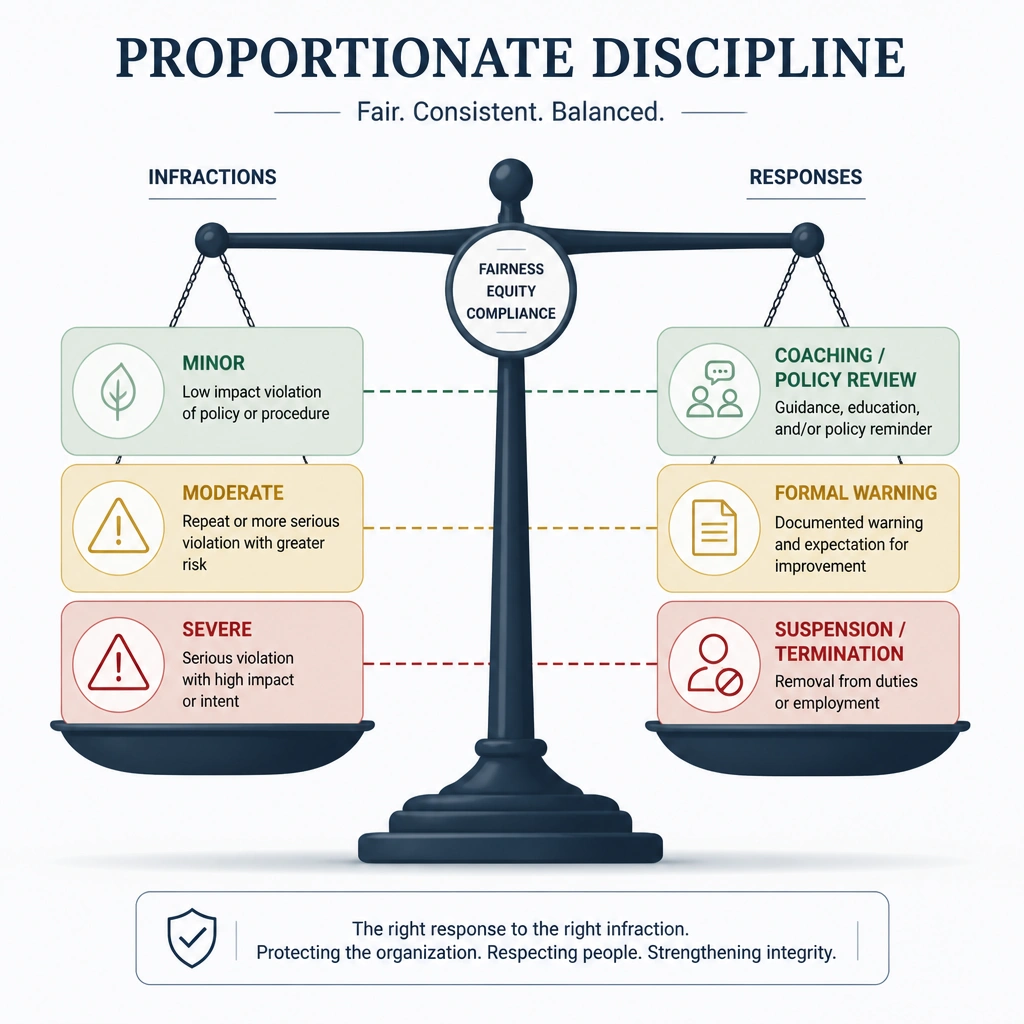
Check this out: compliance isn't about using a sledgehammer to swat a fly. If someone forgets a receipt for a fifteen-dollar lunch, you don't fire them on the spot, and you definitely don't call in external forensic investigators—that's just crazy and wastes tons of money! But you also can't just ignore it, because minor rules still matter. The key word here is proportionality. You want the response to match the infraction. A quick verbal warning or walking them through the policy is the perfect way to handle it. It fixes the problem, keeps morale high, and saves your big guns for the actual bad guys.
Full explanation below image
Full Explanation
An effective compliance program must enforce disciplinary standards and corrective actions consistently and proportionately. When responding to minor, non-systemic policy violations, a compliance officer should implement a response that matches the severity of the infraction. A proportionate response, such as a verbal warning, counseling, or targeted retraining on the specific policy, helps reinforce the organization's compliance culture without causing unnecessary disruption or wasting corporate resources. Ignoring minor infractions is unacceptable, as it can erode the program's credibility and create a culture of complacency. Conversely, disproportionately harsh measures can damage employee trust and discourage future self-reporting. Option A is incorrect because initiating a large-scale, expensive investigation for a minor policy infraction is an inefficient use of resources and is highly disproportionate. Option B is incorrect because immediate termination for a minor administrative error is overly punitive and inconsistent with standard progressive discipline models. Option C is the correct answer because it advocates for a balanced, proportionate, and educational approach to correcting a minor infraction. Option D is incorrect because ignoring any known policy violation undermines the enforcement integrity of the compliance program.