Which of the following characteristics is a fundamental requirement for an organizational compliance risk assessment process to be considered effective under regulatory guidelines?
Select an answer to reveal the explanation.
Short Explanation and Infographic
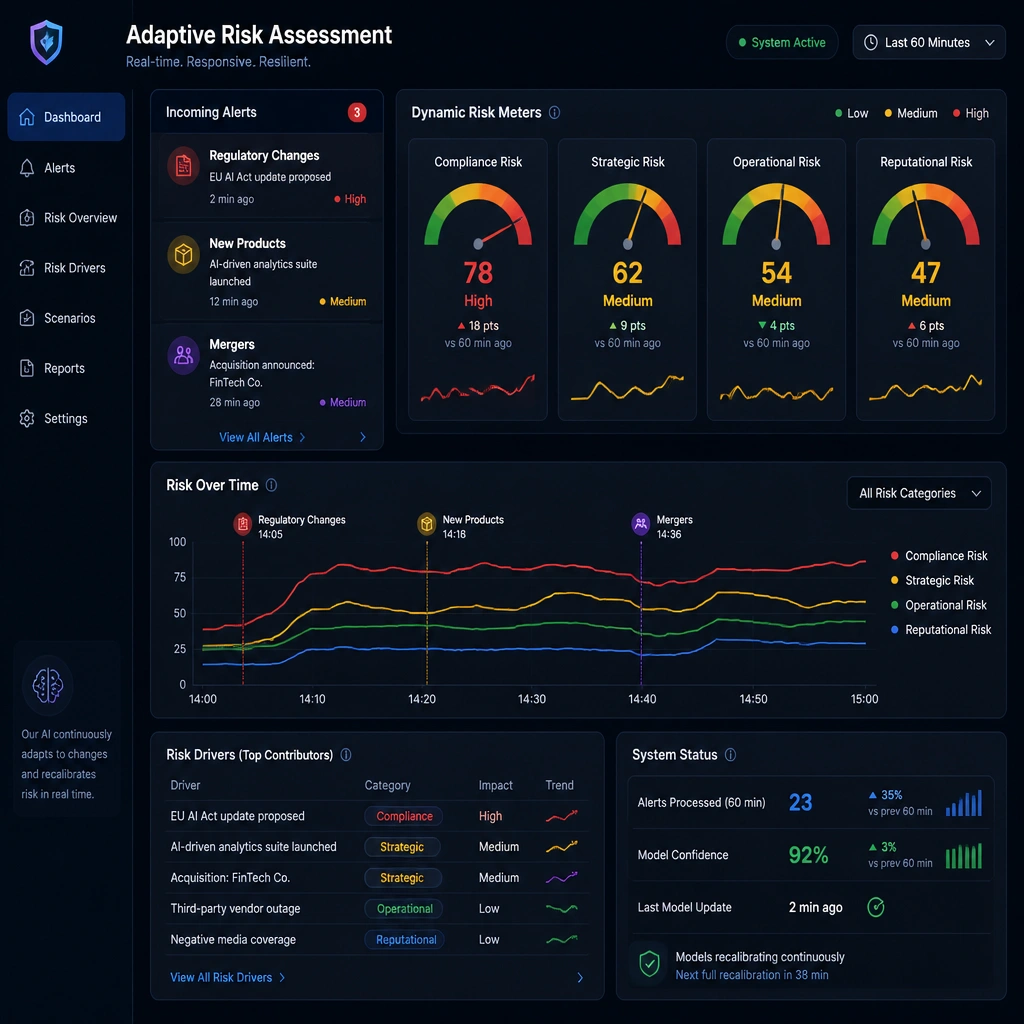
Think of a risk assessment like the GPS on your phone. If you set it once and then ignore the construction, accidents, or new roads that crop up during your drive, you’re going to end up lost or stuck in traffic. In the compliance world, risks change fast. New regulations are passed, your company buys a new subsidiary, or you start selling products in a new country. If your risk assessment is just a one-time paper exercise, or if it only looks at financial risks, you're missing the big picture. And while external audits are great, they don't replace your internal responsibility to keep assessing risk. An effective risk assessment has to be a living, breathing process that constantly adapts to what's happening both inside your company and out in the wider world. Keep it dynamic!
Full explanation below image
Full Explanation
Regulatory guidance, including the DOJ’s Evaluation of Corporate Compliance Programs, emphasizes that a compliance program must be risk-based and tailored to the organization's specific risk profile. Because business environments are dynamic, a static risk assessment quickly becomes obsolete. An effective risk assessment process must be continuous and responsive. It should adapt to internal changes (e.g., geographic expansion, new product lines, mergers and acquisitions, changes in leadership) and external changes (e.g., new legislation, changing enforcement priorities, geopolitical shifts). Let's analyze the incorrect choices: - Option A is incorrect because a compliance risk assessment must cover a wide range of legal and operational risks, including bribery, environmental impact, data privacy, and workplace safety, not just financial risks. - Option B is incorrect because a one-time, static assessment fails to identify new or evolving risks that emerge as the company grows or as regulations change. - Option C is incorrect because although external audits provide valuable independent verification, risk assessment is a core management responsibility that requires deep, day-to-day familiarity with internal operations. Continuous risk assessment ensures that resources are directed toward the areas of highest current exposure, keeping the compliance program proactive and effective.